It's "game on" as the first spring turkey seasons of 2026 opened in the southern half of Florida March 7.
It was soon followed by Mississippi and the South Zone of Texas, which both opened March 14. From there, the season is marching steadily north as warming weather triggers breeding activity and gobbling. By mid-April, much of the country will be hunting. By May, the final northern states will join the chase. If you plan to be among the camo-clad many this spring, one thing you can do now before the season opens in your neck of the woods is take an afternoon and pattern your turkey gun.
Here's the reality: most turkey hunters won’t shoot more than a shell or two in a season at a live bird. For that reason, making those one or two shots count is all the more important. The real recoil-induced pain to your shoulder, as well as to your wallet, should happen well before opening day at the range on a turkey target. Patterning your turkey gun is a critical first step toward your season’s success.
Even if shooting a familiar load and the same shotgun you’ve always used, you still want to pattern your gun prior to opening day. First, you want to make sure everything is operating as you remembered it prior to wiping it down and putting it in the safe at the end of last season. But just as importantly, it will give you the confidence you need to make that all-important shot at the moment of truth. If you’re changing loads from ones you’ve used in the past, you really want to make sure the choke you have in your shotgun pairs well with the load. Plus, practice is always a good thing—especially when done close to “go” time.
Accuracy First
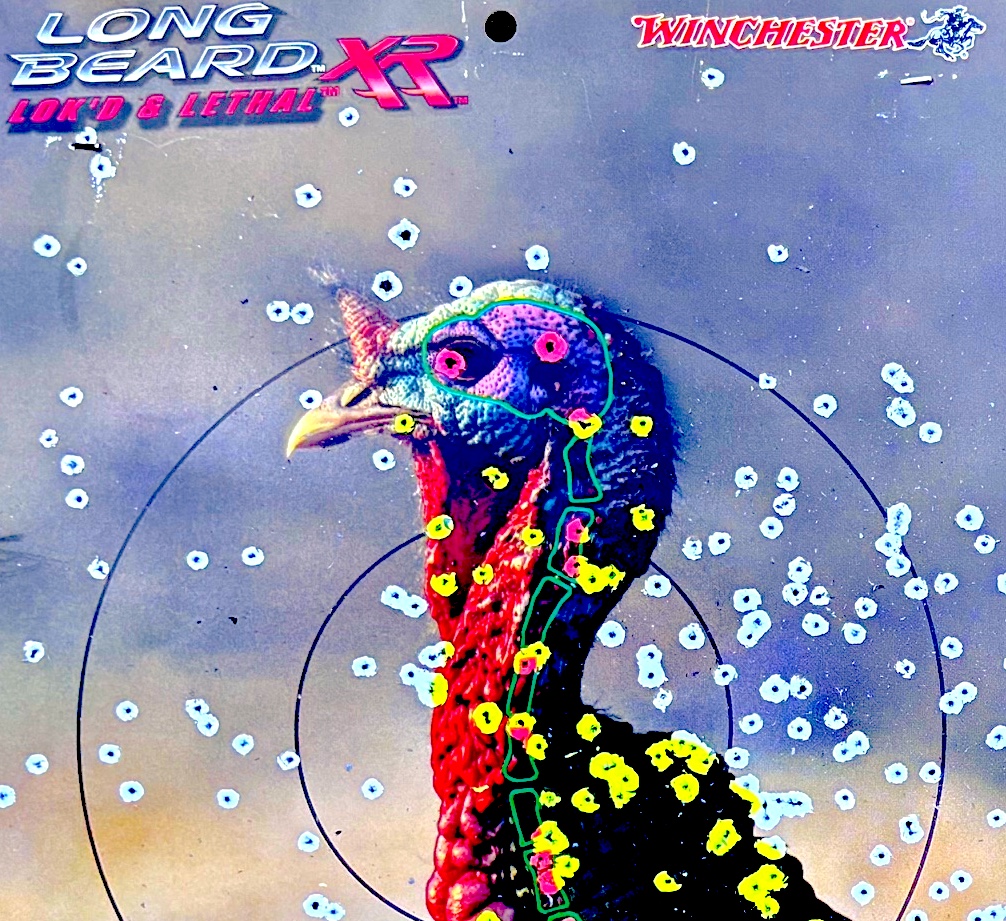
To get the most benefit from a patterning session, first, make sure you have a solid rest, set a turkey target out at 40 yards, and properly sight down your barrel either using a bead sight, front and rear sights or a red-dot optic and slowly squeeze the trigger as if you are trying to centerpunch a 100-yard target with a .308. The first goal is to make sure the point of impact is matching the point of aim and that the spread of shot is evenly distributed across the head and neck area of the target. Once we know the gun/load/choke combo is doing its job, then we want to practice.
Get the Most from Practice
This will need to be done outdoors. Dress in what you’ll wear when hunting (including face mask and gloves), sit on the ground (not a bench) as if you are leaning against a tree in the turkey woods and shoot at targets at varying distances between 15 and 50 yards away. If using tungsten or similar loads, maybe even set a target at 60 yards or more. Learn how your pattern spreads as it travels and where the point of failure is. Make sure the shot is striking the vital area on your turkey target evenly, with multiple pellets in the kill zone. Once you find the limit of your load's ability to evenly cover your target, mentally back off 5 or 10 yards from that distance and note that as the farthest you'll be willing to shoot at a live turkey. Then take your practice to the next level of realism by shooting up and down hills and even between trees. Do this, and you’ll be ready when a real gobbler is standing in front of you, whether it’s in an open field or peaking around a tree or over a hill.